
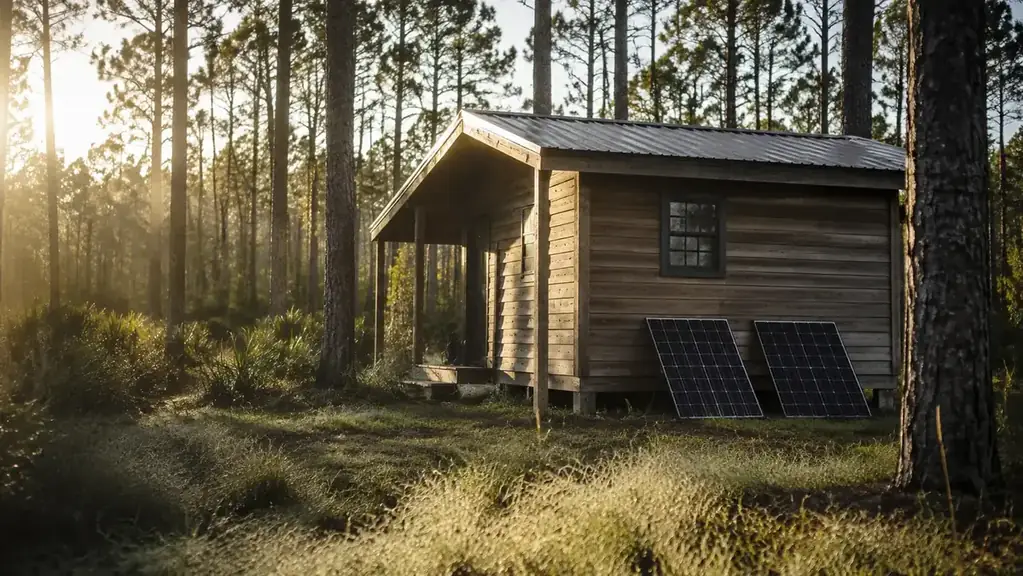
My cabin is a 12x16 wood-sided box on 40 acres of scrub pine in central Florida. No running water, no septic, and no grid hookup. I built it for deer season, but once it was up I started using it most months of the year. The problem was power. For two years I ran a Honda generator when I needed light after dark or a fan in the heat. It worked. It was also loud, it burned gas I had to haul in, and it made the whole point of being out there feel counterproductive.
I work ER shifts, so I understand the value of something that just runs without drama. I started pricing out solar setups the same way I approach gear decisions at work: figure out the actual load, find the simplest thing that covers it, and stop there. After a lot of reading and one false start with an underpowered 100W panel, I landed on two Renogy 200W foldable panels feeding a 1070Wh power station. That combination has been my cabin's only power source for the past eight months.
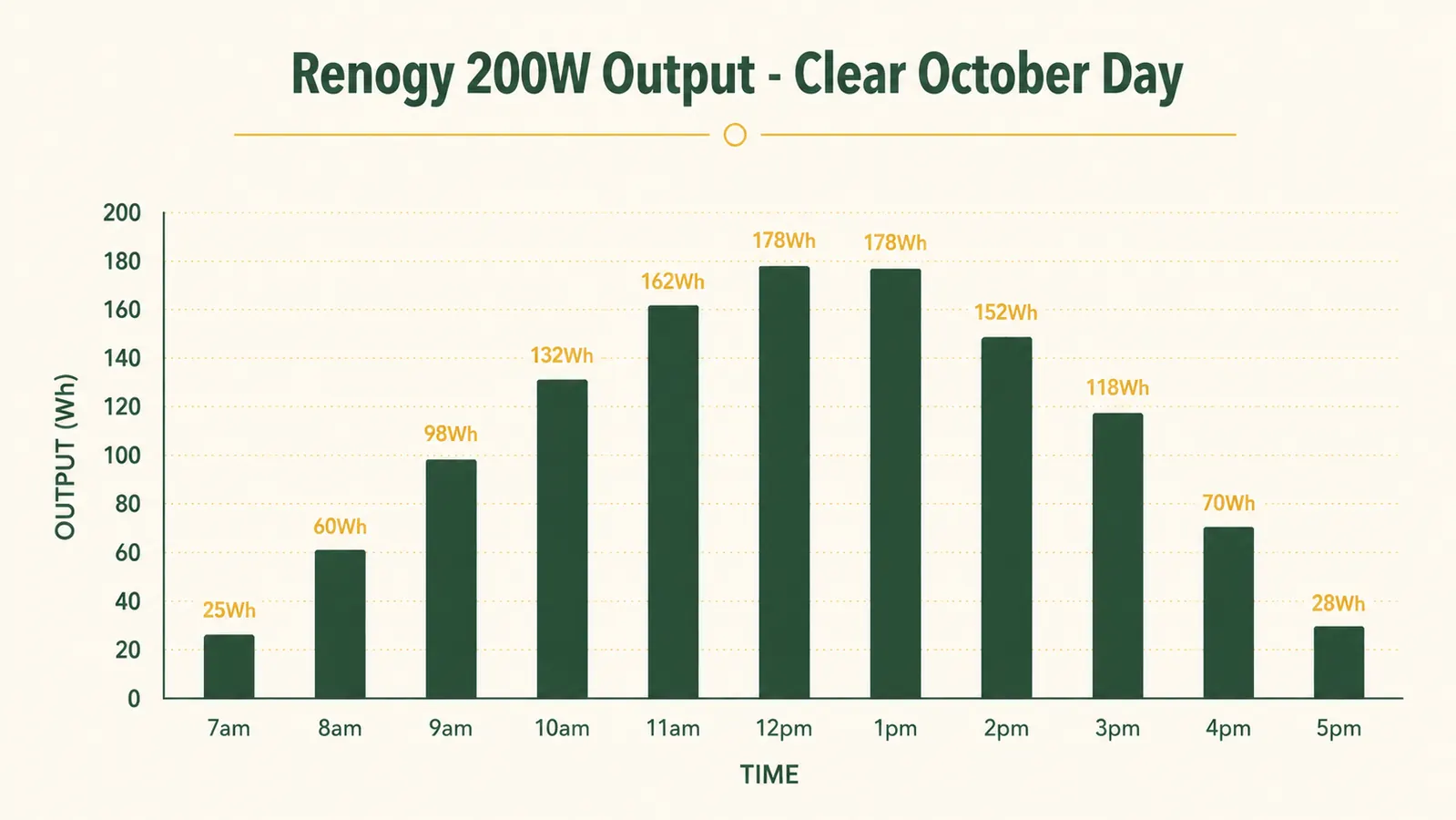
Two Renogy 200W panels in series put roughly 140 to 165 watts into my power station on a typical October morning. By noon on a clear day I have seen 178 watts sustained for over an hour. That is real output, not spec-sheet output.
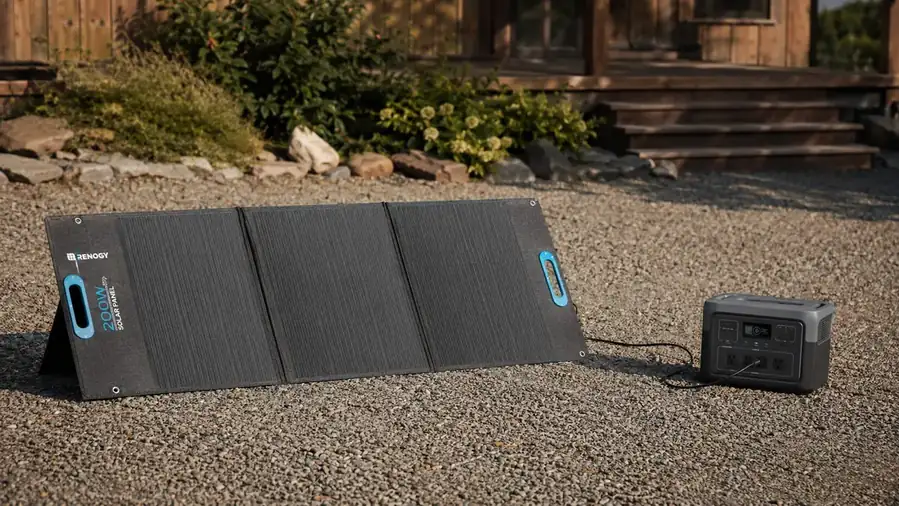
The panels themselves are IP65 waterproofed, which matters in Florida where an afternoon thunderstorm can appear in 20 minutes. I leave them deployed facing south when I am there and fold them flat and lean them inside the door when I leave. Each panel has four integrated kickstands that hold it at roughly a 45-degree angle without any separate hardware. MC4 connectors on the output cables let me daisy-chain both panels in series, which pushes the voltage high enough that the MPPT controller in the power station can pull real current even during a partially cloudy morning.
If you have a small cabin, an RV, or a truck camper that needs real solar charging without the generator noise, this is the panel I would start with.
The Renogy 200W foldable is IP65 rated, includes the MC4 cables, and ships flat. You can be running the same setup I use in a few hours.
Amazon Check Today's Price on Amazon →My load is modest. A small LED shop light, a USB fan, phone and watch charging, and a battery-powered radio. On a full weekend that totals roughly 400 to 450 Wh of draw. With two panels pulling in 800 to 900 Wh on a clear fall day, I stay well above zero even if I arrive with the power station only half charged. I have never dropped below 30 percent state of charge on a two-night stay, and I have gone in at the end of October when the days are shorter and the sun angle is lower.
There are real tradeoffs worth naming. The panels are big when open, around 58 by 44 inches each. They do not blow around in light wind but a 20-mph gust will tip them if the kickstands are not pointed into the wind. I learned that the hard way in March when one folded itself shut while I was inside. No damage, but I started staking the outer corners with tent stakes on windy days. The MC4 output cables are also on the shorter side. I added a six-foot MC4 extension to route the cables without kinking them around the cabin corner. That extension cost about twelve dollars and solved the problem completely.
The panel surface is monocrystalline, which is standard for a panel in this class. In partial shade, output drops significantly, so placement matters more than people expect. I spent one morning testing the difference between full sun and 20 percent tree shadow on one panel and watched output fall from 160 watts to under 80. If your space has shade, you need to think harder about placement than I did when I started. Full southern exposure with no obstructions is the only way to get numbers close to the 200W rating.
What I'd Tell You If We Were Sitting at My Kitchen Table
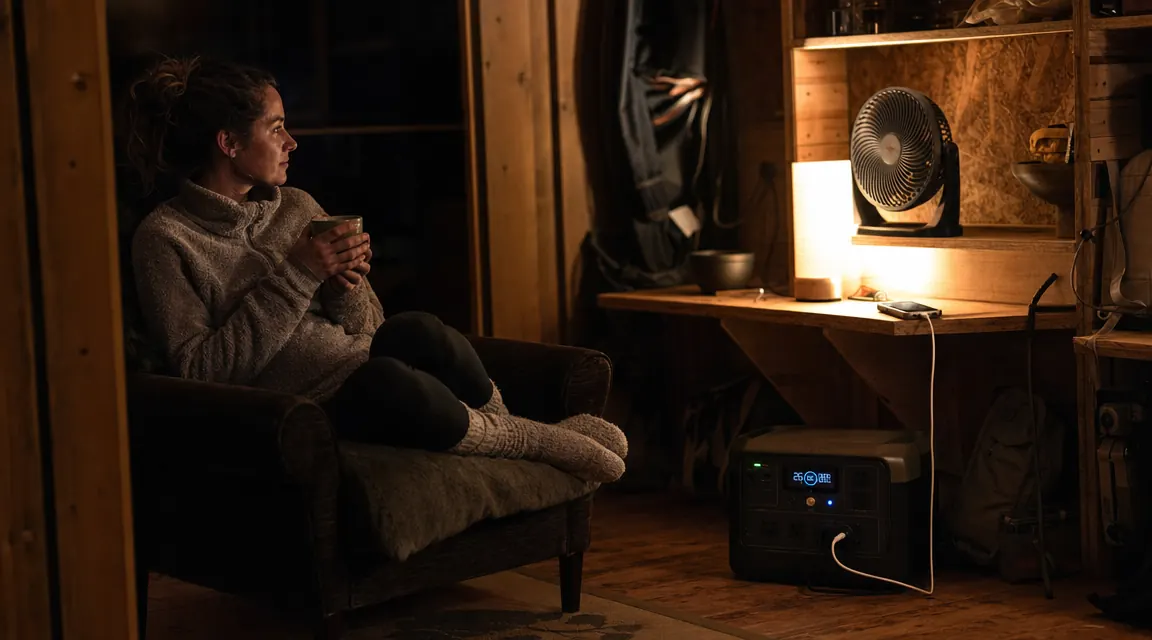
Start with your actual load. Write down everything you want to run, look up the watt draw for each item, multiply by the hours you use them per day, and add 20 percent for losses. If that number is under 500Wh per day, two of these panels with a 1000Wh station will cover you comfortably in most seasons across most of the country. If you are trying to run an air conditioner or a full-size refrigerator off this setup, you are going to be disappointed, but that is a math problem, not a panel problem.
If you want to dig deeper into how the Renogy 200W performs over a full season, I wrote a longer breakdown of the actual watt-hour numbers month by month in my full review. And if you are pairing this with a LiFePO4 battery bank rather than a portable power station, the companion piece on my LiTime 100Ah setup covers the wiring and the charge behavior in detail.
The generator still lives in my truck. I have not run it at the cabin in eight months. For a 12x16 space with reasonable loads and a cleared south exposure, the Renogy 200W setup does the job without the noise, the fuel, or the smell. That was the whole point.
Two panels, one power station, no generator. That is the whole setup.
If your cabin, RV, or camp spot has decent southern exposure, the Renogy 200W foldable panel is where I would start building that system. Check the current price and availability on Amazon.
Amazon Check Today's Price on Amazon →