
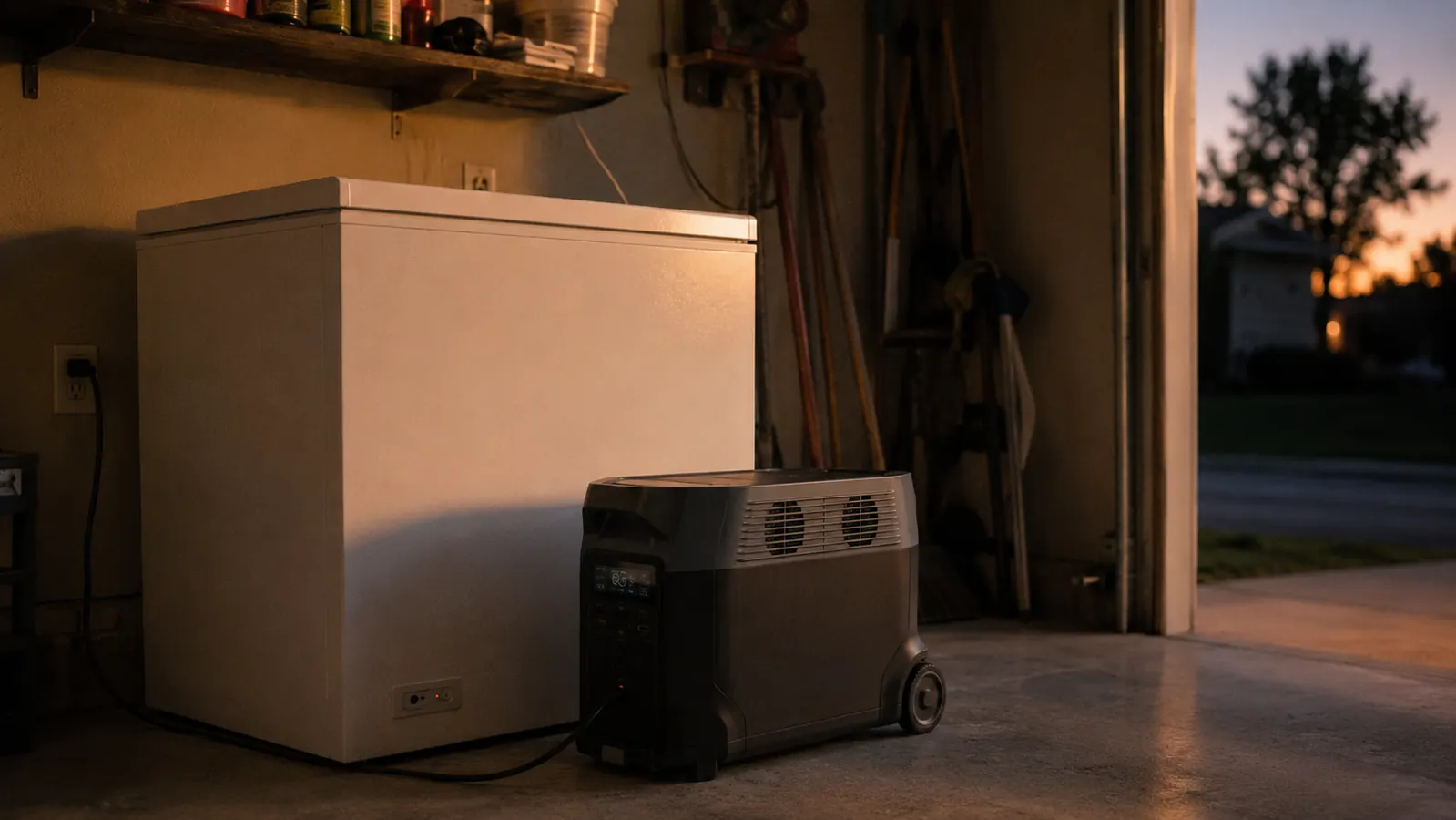
The fall after Hurricane Idalia, I sat in my kitchen for four days without grid power. My neighborhood in central Florida did not flood, but the transformer on our block blew and the utility crews were working twelve-hour shifts on harder-hit streets first. I had a chest freezer with about $400 worth of food, a CPAP I genuinely need to sleep safely, a nebulizer my mother-in-law uses daily for her asthma, and a ham radio I use for our county ARES net. I had a gas generator, too, but I ran out of ethanol-blend fuel on day two and the gas stations with power had lines stretching out into the street. That experience is what made me spend serious money on the EcoFlow Delta Pro 3600Wh. I ordered it the week the power came back. That was thirteen months ago.
I have since run the Delta Pro through two additional multi-day outages, a full summer of hot-weather cycling, three months of daily solar top-offs via a pair of 200W panels, and more nighttime CPAP sessions than I can count. This review covers what I actually learned, not what the spec sheet says.
The Quick Verdict
The best all-in-one backup station I have tested for a household with medical equipment needs. Heavy, expensive, and the app has had two major UI overhauls in a year, but the underlying hardware has never failed me during an outage.
Amazon Check Today's Price →If you have a CPAP, a freezer, or anything medical that needs power when the grid drops, this is the unit I trust.
The EcoFlow Delta Pro 3600Wh is the power station I keep plugged in 24/7 in my garage. Check today's price on Amazon before the next storm season.
Amazon Check Today's Price on Amazon →How I Have Used It
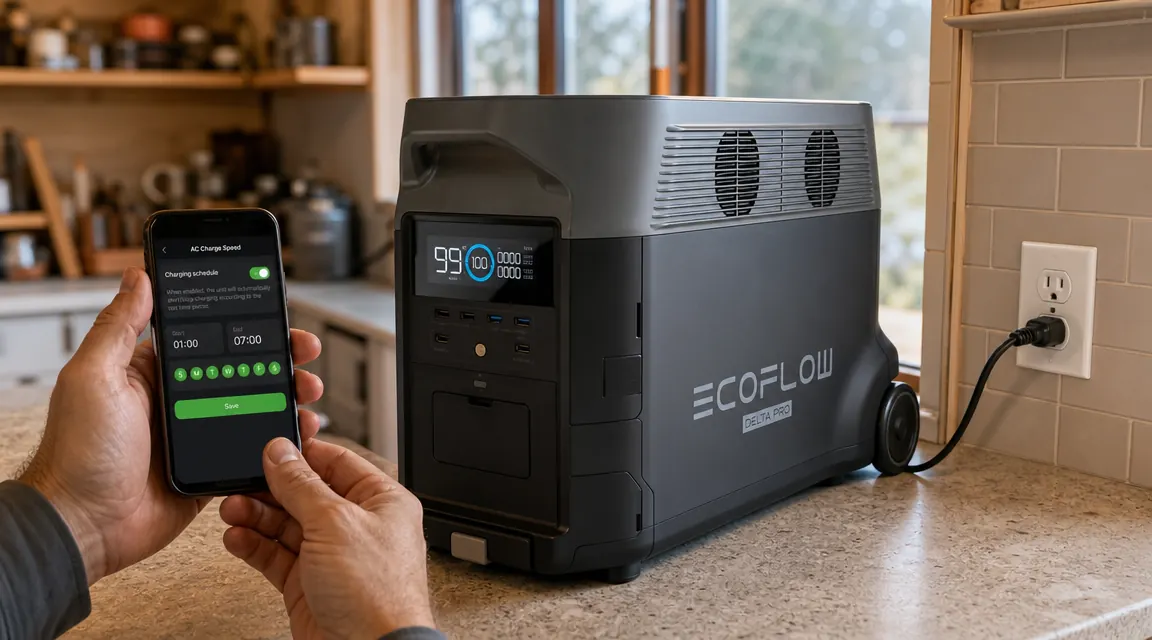
My primary use case is whole-home backup for a 1,600-square-foot house in Florida. I do not try to run everything. My load plan is: one 7.5 cu ft chest freezer (a Midea, runs about 100-130W when the compressor cycles), one ResMed AirSense 11 CPAP with heated humidifier (draws about 30-45W overnight), a box fan (65W), a Kenmore portable AC in the bedroom rated at 900W nominal but I only run it for the first two hours of sleep to drop the room temperature, a Philips Respironics home nebulizer (roughly 150W, used twice daily for about ten minutes), and various phone and laptop charging.
In practice, the AC unit is the variable I have to manage carefully. Running it at full blast eats 900W sustained and would drain the Delta Pro in about three to four hours if I ran nothing else. My actual protocol during outages: pre-cool the room to 73 degrees using the AC for ninety minutes in the early evening, then shut it off, rely on the fan overnight, and let the freezer cycle normally. Under that load profile, I get right around 30-32 hours of runtime before the Delta Pro hits 15 percent, which is the point I stop drawing from it to protect the LFP cells.
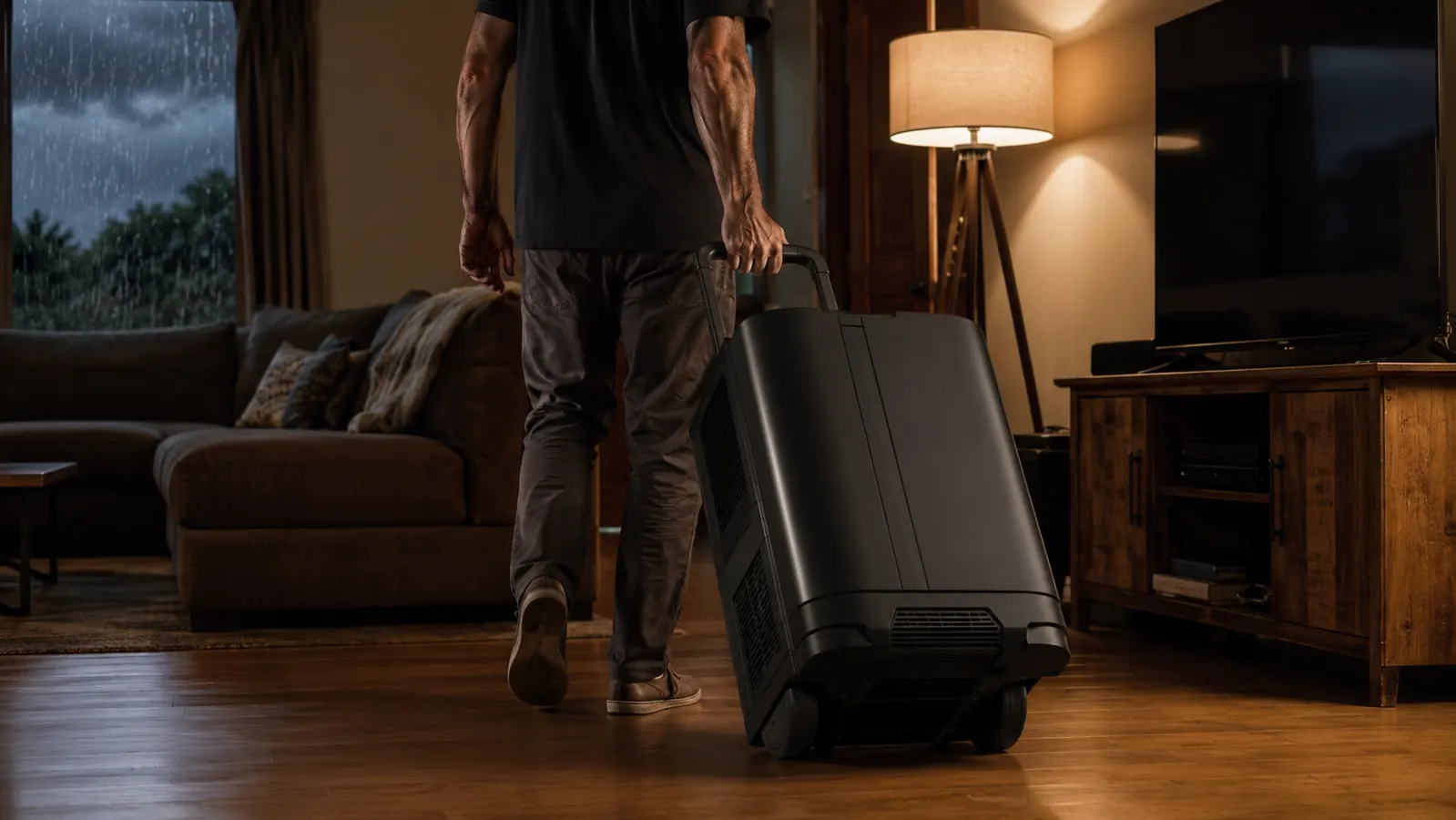
I also take the Delta Pro camping twice a year in my truck camper. For camping it is almost absurdly overpowered. It handles a propane-free cook setup (an induction cooktop at 1,800W for short sessions), phone charging, a camp projector, and a portable refrigerator with capacity to spare. The wheels and the recessed carry handle make it manageable for one person to move, though at about 99 pounds with the standard battery unit, I would not want to carry it more than thirty feet without the wheels.
Capacity: What 3600Wh Actually Delivers
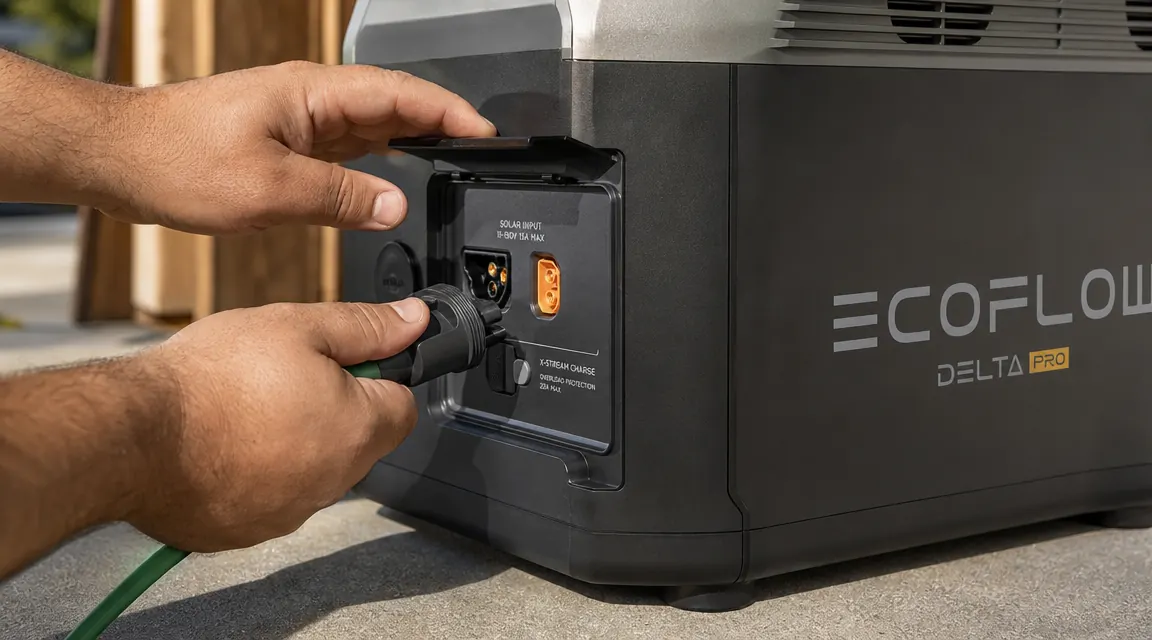
The advertised capacity is 3600Wh. EcoFlow rates LFP cells to 80 percent capacity retention at 3,500 cycles, which is meaningful for a station you plan to keep for a decade. After thirteen months of use, I am getting consistent measured output of between 3,350 and 3,420Wh per full discharge, which tells me there is very little degradation so far. I measure this using a watt-hour meter on the AC output rail, not by trusting the app's reported remaining capacity.
One thing worth knowing: usable capacity is somewhat temperature-dependent. During August in Florida when the garage where I keep the unit regularly hits 95 to 100 degrees Fahrenheit, I noticed the BMS (battery management system) gets conservative. On one particularly hot evening I saw the unit cut off AC output at 8 percent rather than the usual 5 percent, which I interpreted as the BMS protecting cell health in high-ambient conditions. This is normal LFP behavior, not a defect, but it means you might get a slightly shorter practical runtime in a hot garage versus a climate-controlled closet.
After thirteen months of hard Florida summers and three real outages, my measured output is still 3,350 to 3,420Wh per full discharge. That is a very healthy retention figure for a first year.
Charging: AC Wall Speed, Solar Reality, and EPS Mode
EcoFlow rates AC wall charging at 1,800W input, which gives a full charge from zero in about 2.7 hours at a standard 120V/20A outlet. I have confirmed this roughly matches reality: my typical full charge from 10 percent takes between 2 hours 45 minutes and 3 hours 10 minutes depending on how warm the battery is. This is noticeably faster than every competing station I have used. The Bluetti AC300, which I have borrowed from a friend, takes close to 6 hours for a comparable charge via a single AC input.
Solar is a different story. The Delta Pro accepts up to 1,600W of solar input, but that requires running multiple high-wattage panels in series. My current setup is two Renogy 200W mono panels wired in series giving me roughly 380 usable watts under peak conditions. On a clear Florida summer day between 10am and 2pm, I am pulling 340-360W consistently, which means a full charge from zero would take about 10-11 hours of peak sun. More practically, I use solar to top off between 40 and 90 percent during the day and then plug in at night if I want a full charge before a storm. For true solar-first users who want to go without wall power, you need more panels.
EPS mode, which switches to battery within 30 milliseconds of a grid outage, is one of the features I cared most about. Medical equipment like my CPAP and the nebulizer cannot tolerate a hard power cut mid-cycle. EPS works exactly as advertised. During the two most recent outages, both devices transitioned off grid without interruption. The CPAP did not lose its humidifier settings, and the nebulizer did not reset. That alone justifies a significant portion of the price for my household.
The App: Functional, But It Has Had Growing Pains
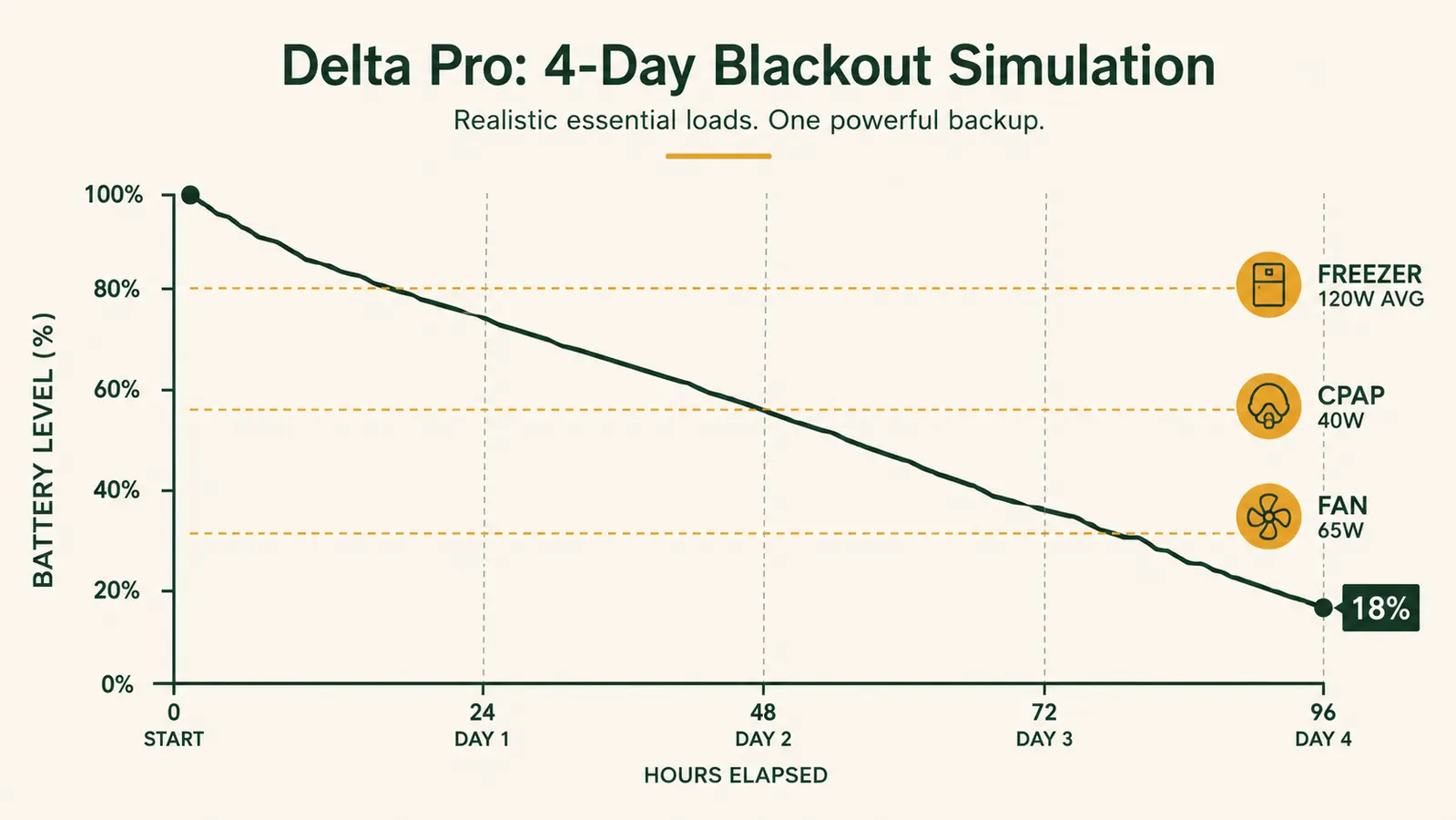
The EcoFlow app has seen two significant redesigns in the thirteen months I have owned this unit. The first redesign in late 2024 broke my saved charging schedule for about three weeks until a firmware update patched it. The second redesign, in early 2025, changed the location of the solar input display and temporarily removed the ability to set upper charge limits (I keep mine at 80 percent for daily storage to extend long-term cell life). EcoFlow did restore the upper charge limit feature, but the episode was frustrating.
When it works, the app is genuinely useful. Real-time wattage in and out, historical consumption graphs, remote control of AC/DC outputs, and the ability to schedule charge windows are all things I use regularly. The Bluetooth connection is reliable within about 30 feet. Wi-Fi connectivity works at my home but I have had intermittent drops at a campsite where my hotspot signal was weak. For a device at this price, I think the app experience has been acceptable but not excellent. It should not be the reason you buy or avoid this unit.
Running Medical Equipment: What I Actually Learned
As an ER nurse, I take equipment reliability seriously. Three things I have validated over the past year. First, the CPAP runs cleanly with heated humidifier enabled at the ResMed AirSense 11's default heated tube setting. Some lower-end power stations produce a modified sine wave that causes the humidifier to make unusual sounds or the device to throw a fault. The Delta Pro outputs pure sine wave AC and the CPAP runs identically to grid power. Second, the Philips Respironics nebulizer, which is a brushless compressor motor, draws about 150W and also runs without any issue. Third, I have run a small 12V medical-grade portable oxygen concentrator as a test (not for a current patient need, but because I wanted to know if it would work). It ran fine on the AC output at about 300W.
One practical note on medical use: the fan inside the Delta Pro is audible during high-load conditions. At full 3,600W AC output, the fan is clearly noticeable in a quiet room, comparable to a moderate desktop computer. At typical overnight loads of 150-250W total, the fan is much quieter, closer to a white noise machine. For a CPAP user who is noise-sensitive, the fan should not be a problem at typical low overnight loads.
What I Liked
- 3600Wh LFP capacity runs my freezer, CPAP, nebulizer, and fan for 30+ hours in real-world testing
- 2.7-hour full recharge via AC wall outlet is genuinely fast compared to alternatives in this class
- EPS mode transitions in under 30ms, meaning medical equipment does not notice the grid switching off
- Pure sine wave AC output runs sensitive electronics and motor loads without issue
- LFP chemistry rated for 3,500 cycles to 80% capacity, suitable for a 10-year time horizon
- Expandable up to 25kWh with additional Delta Pro batteries and the Smart Extra Battery
- Wheels and telescoping handle make a 99-pound unit practical for one-person mobility in a home setting
Where It Falls Short
- At 99 pounds, loading it into a truck without a ramp or a second person is a real challenge
- App has had two disruptive redesigns in thirteen months, including a period where charge scheduling was broken
- Getting above 800W of solar input requires additional panels and compatible cabling that adds cost and complexity
- Current price puts it out of reach for buyers who only need occasional short outage coverage
- Heat management in high-ambient environments means you may lose 5-10% of usable capacity in a hot garage
Who This Is For
If you live in a storm-prone region and you have at least one person in your household with medical equipment that needs clean, uninterrupted power, the Delta Pro is the right unit to evaluate seriously. The EPS mode and pure sine wave output are not optional extras at that point, they are the whole reason you are buying something in this category instead of a gas generator. The 3600Wh capacity is also specifically sized for multi-day outages: it is not a weekend-camping battery, it is a serious household backup unit that happens to also work for camping. Buyers who want something portable for RV trips or occasional camping would be better served by a 1,000-1,500Wh unit that weighs a third as much. The Delta Pro is for people who need 3-4 days of essential load coverage when the grid fails.
Who Should Skip It
If your primary outage concern is keeping your phone charged and running a few lights during a one-night event, this unit is overkill at this price. A 1,000Wh station handles that at a much lower cost. If you want to run central air conditioning, a full refrigerator-freezer, or a well pump, the Delta Pro alone is not the answer either. Those loads require a transfer switch setup with either dual Delta Pros or the EcoFlow Smart Home Panel, which adds significantly to the cost. For buyers considering that full home-circuit backup setup, I recommend reading my separate guide on wiring the Delta Pro as a whole-home backup before purchasing. And if weight is a serious constraint because you need to physically carry the unit up stairs or into a vehicle by yourself regularly, the 99-pound figure will get old fast. Consider whether the Jackery Explorer 2000 Pro at about 43 pounds and 2,042Wh is a more practical fit for your mobility needs.
Thirteen months, three outages, zero failures. If you have medical equipment that cannot go without power, here is where to check the current price.
The EcoFlow Delta Pro 3600Wh is available on Amazon with current pricing that fluctuates seasonally. Check today's price and see if it ships free to your address.
Amazon Check Today's Price on Amazon →