
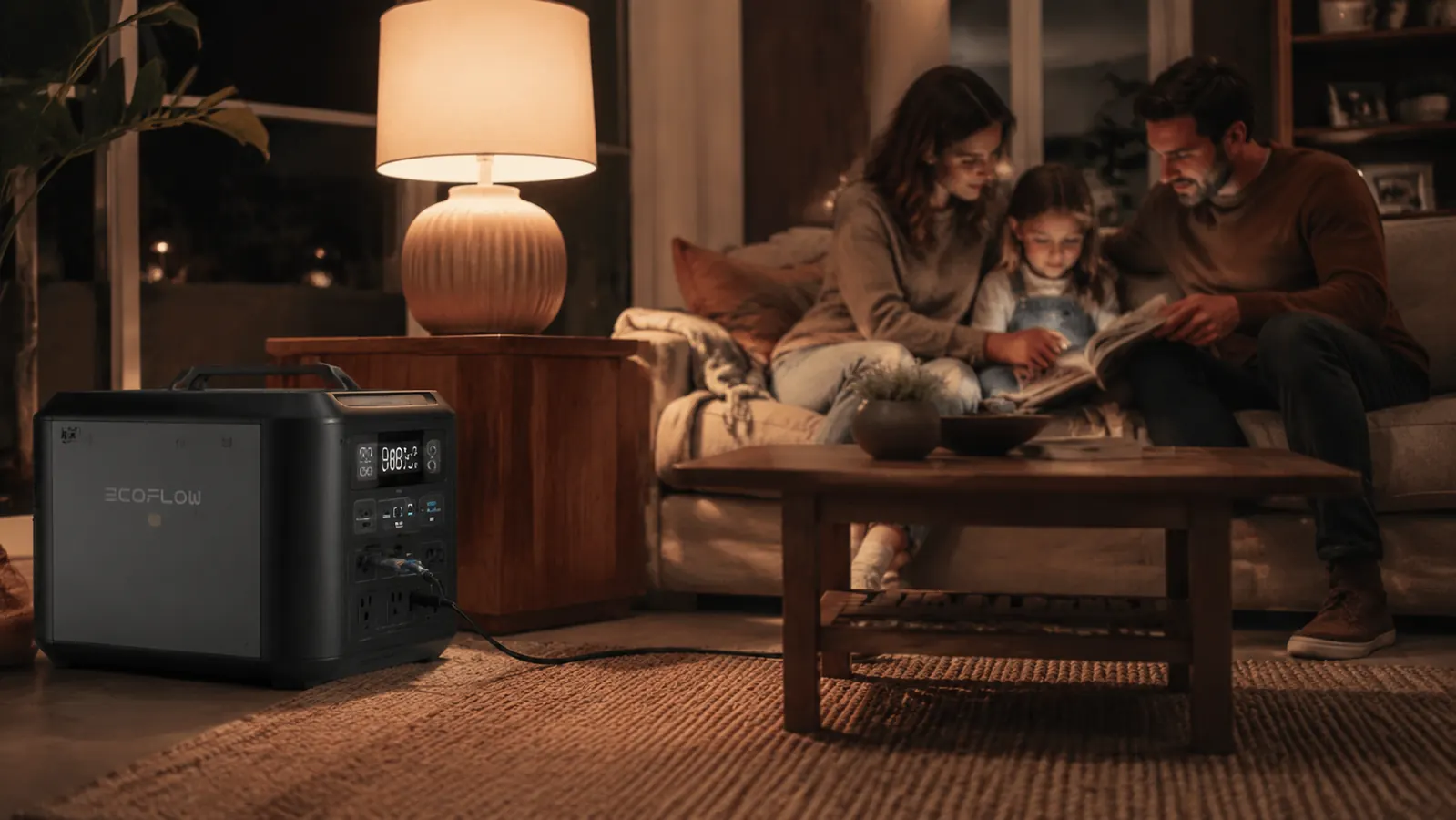
I have been through three multi-day outages in the last four years. The first two I rode out with a 5500-watt gas generator my neighbor loaned me. It ran the fridge and a fan, smelled like a parking garage, and quit twice because I forgot to add stabilizer to the fuel. The third outage I had the EcoFlow Delta Pro, and the experience was so different it felt like cheating. I am not saying the Delta Pro is perfect. I am saying that for most suburban and semi-rural households, a gas generator is the wrong tool for the job, and the Delta Pro is the right one.
Here are ten specific reasons I say that, based on actual use, not spec-sheet reading.
If your outage plan still relies on gasoline, this is worth a look before hurricane season.
The EcoFlow Delta Pro holds 3600Wh, puts out 3600W continuous AC, recharges to 80% in about 2 hours on wall power, and runs completely silent indoors. Current pricing is on Amazon.
Amazon Check Today's Price on Amazon →No Carbon Monoxide Risk Indoors
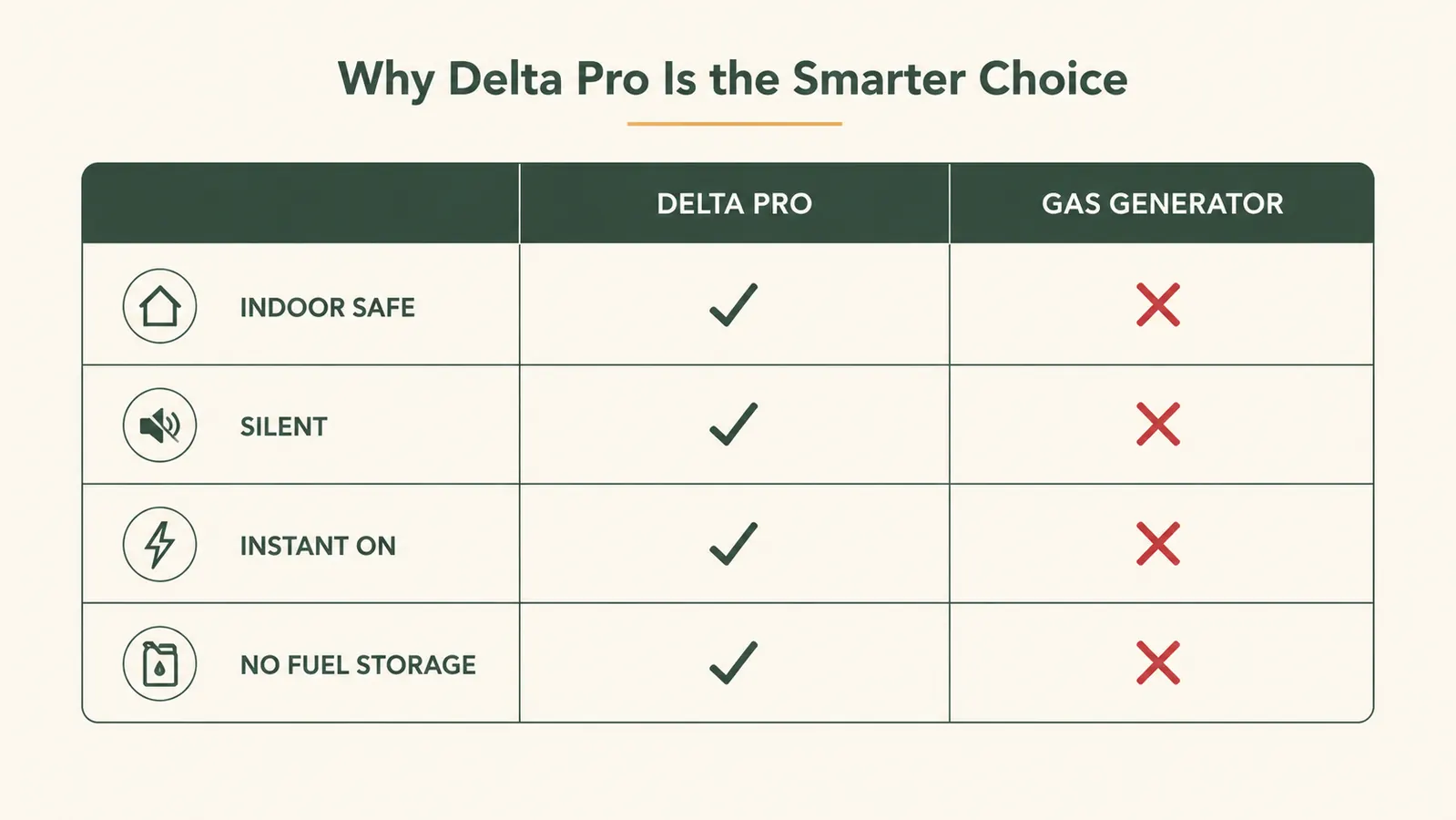
Gas generators produce carbon monoxide. That is not a scare tactic, it is chemistry. Every year people die running generators in garages, partly open windows, or carports. The Delta Pro produces zero exhaust. It runs in your living room, bedroom, or anywhere else with no ventilation requirement. For a household with kids, elderly parents, or anyone with respiratory issues, this alone closes the argument.
No Fuel Storage Headache
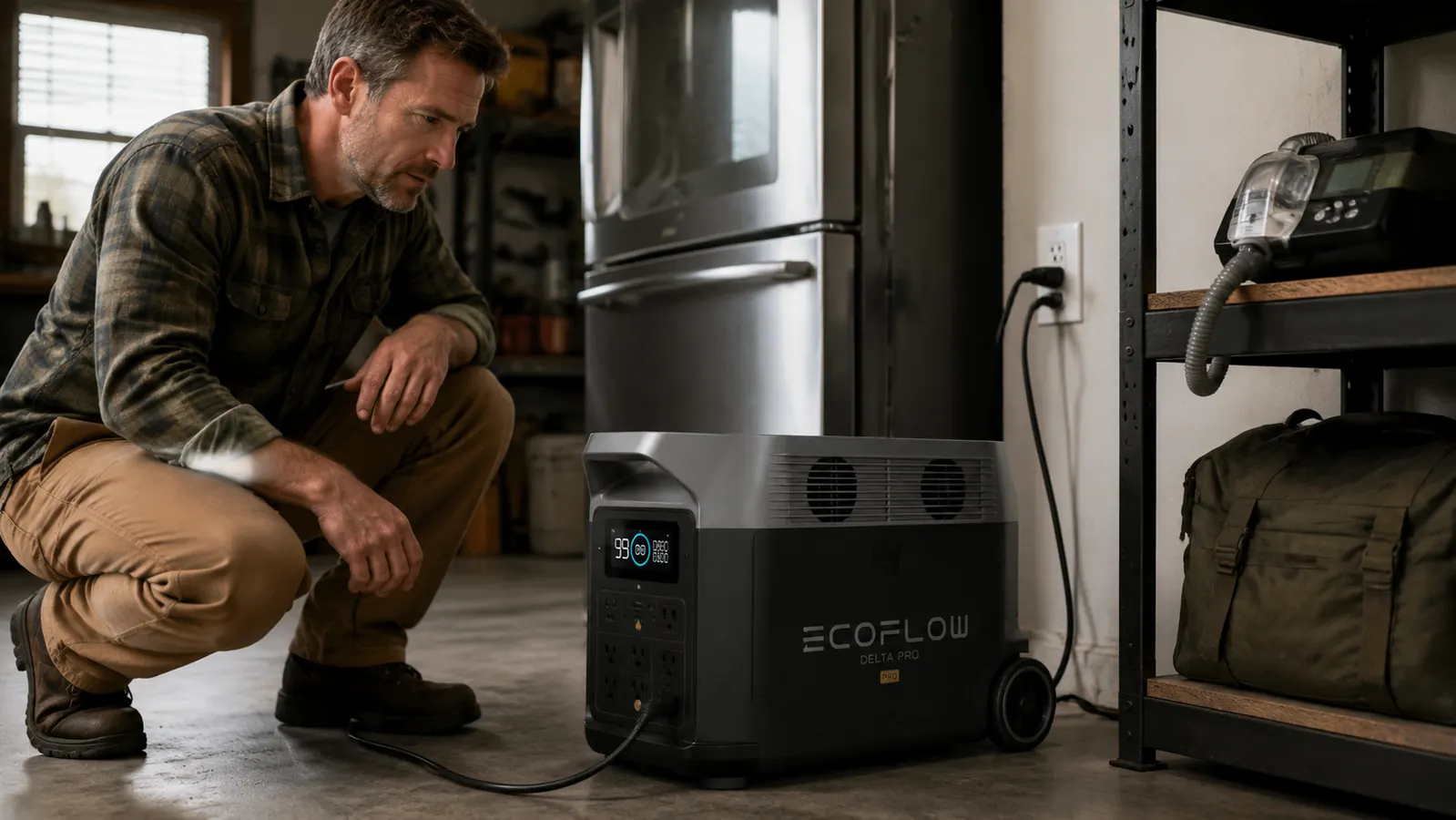
Storing 10 gallons of treated gasoline in your garage is a genuine fire hazard and smells terrible. You have to rotate it every 90 days or add stabilizer, or the carb jets gum up. The Delta Pro stores charged and ready on a shelf. Plug it in periodically to maintain the battery at 80-90% and you are done. No jerricans, no stabilizer, no rotating stock.
No Carburetor to Seize When You Need It Most
The most common gas generator failure mode is a clogged carburetor from sitting too long between uses. I have seen this exact scenario play out with neighbors twice in my neighborhood. The storm hits, they pull the generator out, and it will not start. The Delta Pro has no carburetor. Power electronics do not seize from sitting. Wake it up, plug in, done.
Silent Operation at Night
A typical 5500W open-frame gas generator runs at 70-76 dB, which is about the volume of a vacuum cleaner running continuously outside your window. The Delta Pro produces around 30 dB at idle and under 45 dB under heavy load. I ran it all night during a four-day outage and slept normally. My neighbors with gas units rotated shifts to refuel and could not sleep through the noise.
3600Wh Handles a Refrigerator, Lights, and CPAP Comfortably
A typical home refrigerator draws 100-150W average and a CPAP without heated humidifier pulls around 30-60W. At those loads the Delta Pro's 3600Wh gives you 18-24 hours of continuous fridge plus CPAP before you need a recharge. Throw in phone charging and a few LED lights and you are still looking at a full night and then some. Most 5500W gas generators burn through a gallon of fuel every 2-3 hours at 50% load, which means multiple fuel runs for a multi-day event.
Recharges From Solar When Grid Power Is Out for Days
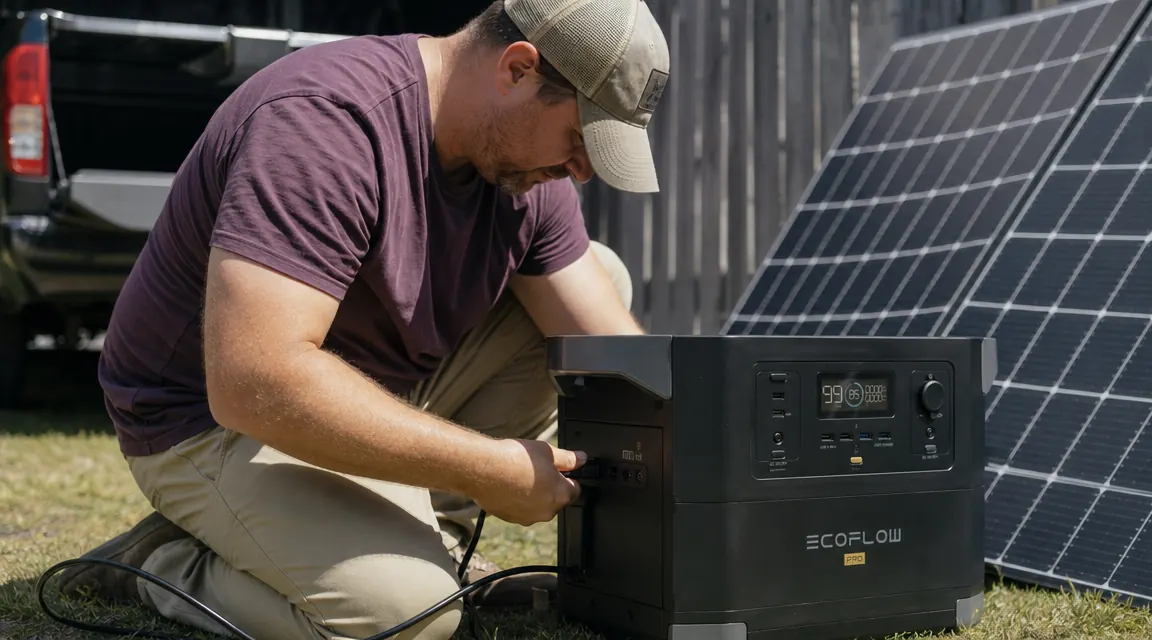
This is the real gap between a battery station and a gas generator. If the outage runs past 24 hours, a gas generator needs fuel. Fuel stations run out or lose power themselves after major storms. The Delta Pro accepts up to 1600W of solar input. Two Renogy 200W panels plus a clear day gets you 12-15 hours of refill time. Pair a third panel and you are close to energy-neutral on sunny days without touching the grid.
Instant-On With No Pull Cord or Warm-Up Period
The Delta Pro goes from standby to full output in about 30 milliseconds. There is no pull cord, no choke position, no waiting for the engine to warm up before you load it. Press the AC button and plug in your devices. That matters at 2 a.m. when the grid drops and your sump pump needs power right now.
Expandable to 25kWh With Additional Batteries
This is something a gas generator simply cannot do. The Delta Pro is expandable to 10.8kWh with two Smart Extra Batteries, or all the way to 25kWh with the Smart Home Panel 2 and additional units. No gas generator scales like that. If your needs grow, the Delta Pro grows with you. Most gas generator owners buy a bigger unit and have two machines sitting in the garage.
Works for Camping and Overlanding Too
A gas generator has exactly one job: emergency power at home. The Delta Pro has an external solar input port and a 12V car outlet, so it doubles as a serious camping and overlanding battery. It weighs 99 pounds, which is not light, but it rolls on wheels. I have run it at a dispersed campsite powering a camp fridge, a projector, and a portable induction cooktop at the same time. No gas generator in that price range is something you take camping.
EcoFlow's App Lets You Monitor Load and Recharge Time in Real Time
The EcoFlow app shows your live wattage draw, estimated time remaining at current load, and lets you set charging limits to preserve battery health long-term. You can see exactly when the fridge compressor kicks on and watch the watt-draw spike. A gas generator gives you nothing but a fuel gauge. For anyone who wants to actually manage their power during an extended outage, the data visibility alone changes how you operate.
What I Would Skip
The Delta Pro is not the right tool if your household load is heavy and sustained. If you are trying to run a central AC unit, a well pump, or an electric range for more than a few hours, a gas generator with higher continuous wattage and a fuel supply will outlast the Delta Pro at those loads. Also, 99 pounds is real weight. If you need to move it up stairs or load it into a truck bed solo, plan accordingly. And the current price is meaningful. This is not an impulse buy. If your power outages are rare, short, and you already have a functioning gas generator in good shape, the case for switching is weaker.
The carburetor failure is the gas generator's dirty secret. The Delta Pro has no carburetor. That single fact has kept more than one neighbor in the dark during a storm while I had power.
If a multi-day outage is your real concern, 3600Wh of silent indoor power is worth knowing the current price.
The EcoFlow Delta Pro is the most capable single-unit power station I have used for home backup. The 3600W output handles everything except HVAC. Check what it costs today before the next storm season.
Amazon Check Today's Price on Amazon →